
Young people are turning to AI after online harm: Youth Perspectives Survey 2025.
July 31, 2026
5 Minute Read

Technology changes quickly, and young people typically experience these changes first.
Each year, Thorn’s Youth Perspectives survey helps us understand how young people navigate their online environment.
AI chatbots and companions are now part of many young people’s lives, with 67% of respondents reporting they have used them, including 3 out of 4 teens. This widespread use demonstrates a need to better understand how young people respond to daily situations and how these tools shape their online experience and behaviors.
One of the clearest findings from this year’s survey is that AI chatbots and companions have become part of how young people navigate difficult challenges. For some, these tools are becoming sources of advice, reassurance, and even disclosure after online sexual interactions.
How do young people use AI chatbots?
Our research shows that AI plays a complicated role in young people’s lives, both positive and negative. On one hand, it gives youth another tool to help them navigate potentially harmful online experiences. On the other hand, AI tools can also be misused to cause harm.
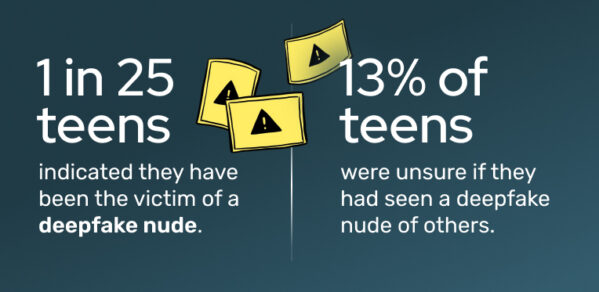
The survey shows that youth are dealing with AI-generated harms, like deepfake nude imagery. 1 in 25 teens indicated they had been the victim of an AI deepfake nude, and 7% said they have seen a deepfake nude of another child. An additional 13% of teens were unsure if they had seen deepfake nudes of others. This shows how recent advancements in AI technologies are creating new harms and challenges for young people attempting to make sense of the experiences they encounter online.
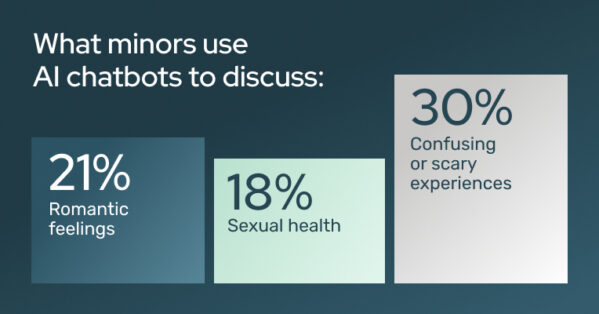
Along with being used to cause harm, many young people are also using AI tools to seek information and support. More than 1 in 4 (29%) minors said they’ve turned to an AI chatbot or companion for sensitive or personal topics. This includes getting advice about romantic feelings (21%) or finding information about sexual health (18%). When something confusing or scary happened to them or someone else, 30% of minors went to an AI chatbot to discuss it.
Why are young people turning to AI chatbots for support?
Many young people can be embarrassed or uncertain after an online sexual encounter. While this survey doesn’t directly answer why young people may choose to seek guidance or support from AI, the data raises several possibilities.
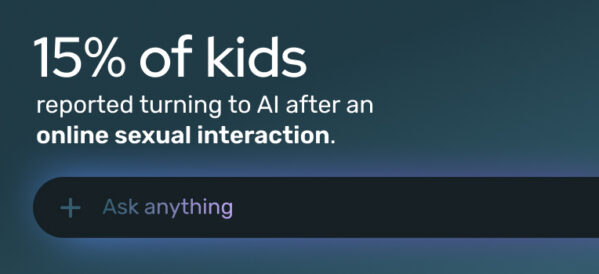
One very telling point from our research is that the most frequent way youth choose to navigate online harms is through online tools, rather than through offline support. AI chatbots may feel immediate, private, and nonjudgmental following confusing or scary moments. Our data shows that 15% of kids reported turning to AI after an online sexual interaction, more than twice the rate of minors who were bullied or made uncomfortable online (7%).
This finding becomes even more important in light of another trend from this year’s survey. More 9-12-year-olds reported not disclosing harmful experiences to anyone, bringing their nondisclosure rates in line with older teens. For young people who do not seek help because of fear, judgment or shame, these tools may increasingly be a part of how they attempt to deal with online harms.
This echoes a trend we’ve been tracking since 2020. Minors have consistently indicated that they use platform safety features, such as blocking and reporting tools, more often than they ask a friend, caregiver, or other trusted adult for help. On average, 43% more minors have pursued online tools over offline support to respond to an online sexual experience.
How AI chatbots should respond when young people disclose harm
These findings raise an important question for the technology industry: What happens when an AI technology, like a chatbot or companion, becomes the first — or only — place a young person discloses sexual harm? A young person can now seek help and have a conversation about abuse they’re experiencing without ever having a face-to-face interaction with another person. This raises significant questions about the quality of support kids are receiving and where responsibility related to that disclosure lies.
What’s clear today is that AI tools, especially in the context of handling a child’s disclosure of sexual harm, need evidence-based safeguards and age-appropriate designs. Tech companies must understand the responsibility they have when a young person turns to an AI tool in the wake of sexual abuse. Developing technical safeguards is an immediate need, as is consistency in the offline resources they provide, alongside promoting avenues to human support.
What AI use means for child safety
AI chatbots and companions are becoming part of how young people experience — and respond to — the digital world. As these tools continue to become trusted sources of information, advice, and support, they represent an important part of the child safety ecosystem.
Building a safer digital future requires understanding how technology is influencing a child’s development in real time. Our Youth Perspectives survey helps ensure that platforms, policymakers, caregivers, and child safety organizations can support youth as they navigate interactions with emerging technology. As AI continues to advance, listening to young people’s experiences will remain essential to building a digital safety net that protects every child’s right to simply be a kid.
Additional Resources:
- Explore the report to see all the data from the survey.
- Learn how to support your child at Thorn for Parents.
- Download a Conversation Starter Kit.
- Donate to support youth safety and innovation.
Get the latest delivered to your inbox
Related Articles

7 min read

9 min read

7 min read