How Context Labels support child sexual abuse investigations
October 28, 2026
5 Minute Read
Helping investigators find children being abused starts with understanding what stands in their way. Cathal Delaney, Thorn’s Director of Global Engagement – Victim Identification, brings that perspective as a former investigator who helped develop Context Labels.
In a recent conversation, Cathal explained why this additional information matters, how collaboration shaped the technology, and what it can mean for the people working to protect children.
Watch the full conversation below, or keep reading for key insights.
A child sexual abuse investigation can pass through many organizations before it reaches its conclusion. Suspected abuse identified on a platform may be reported to a child protection organization, then referred to law enforcement for investigation and potential prosecution. At every stage, the people involved depend on the information that came before them.
When that information is clear and consistent, the next person can move forward with a strong understanding of the case. When the information is incomplete or presented differently from one organization to the next, investigators may have to spend additional time filling in gaps.
Integrated into Thorn Detect and Safer Predict, Context Labels provide additional useful information about suspected child sexual abuse material, helping platform safety teams and investigators better understand what they are seeing and determine what may require urgent attention.
The challenge of identifying where to focus first
Investigators often face an enormous volume of suspected child sexual abuse material. A single case may involve thousands, if not hundreds of thousands, of files for review. That makes prioritization difficult from the start.
As Delaney explained, “You are looking at undifferentiated material that is all mixed together. It could be of the same victim. It could be of multiple different victims.” He also points out how investigators may receive information from multiple organizations or agencies, each with its own processes, formats, and expectations.
When investigators review large volumes of material, those inconsistencies can slow their work. Information may not arrive in a useful format or contain the level of detail an investigator needs for the next stage of a case. That can mean a delay while the investigator completes additional work before they can begin acting on the information in front of them.
This is where classification standards across the child safety ecosystem matter most. Shared standards create greater consistency between organizations and help make the handoff from one stage of an investigation to the next more efficient.
How do Context Labels support child sexual abuse investigations?
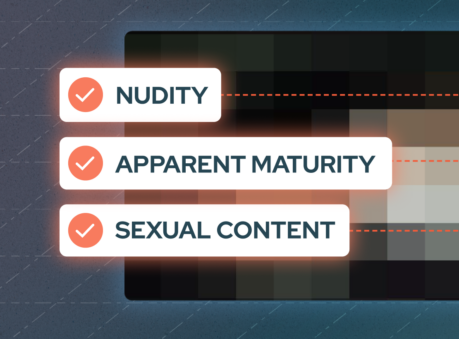
Context Labels add useful information to suspected child sexual abuse material detections, including signals such as apparent maturity, nudity, and sexual content. That information gives safety professionals and investigators another data point they can use when assessing and prioritizing material.
The goal is to support human decision-making at multiple points in a case lifecycle. For example, a Context Label may indicate that the material depicts a very young child. A safety professional can then review that signal, verify the material, and decide whether to escalate it. Adding that information earlier in the process means the next organization receiving the report can begin with more information about what the material may depict.
“I’ve done this work as an investigator, as a computer forensic investigator, for many years,” explained Delaney, who before joining Thorn led Europol’s efforts to counter child sexual exploitation and victim identification work. “If I had the tools that we have now available to me then, it would have made my work much easier. I would have been much more efficient and been able to reach children faster.”
Building a shared language for child protection
Context Labels were also designed with consistency across the child protection ecosystem in mind.
Thorn Context Labels follow the Universal Classification Schema developed by INHOPE.* These are uniform categories agreed by INHOPE and its partners, with the goal of using a shared language across the child safety ecosystem.
“Thorn was one of the first partners in the creation of the Universal Classification Schema, working with INHOPE and partners from across the ecosystem,” said Delaney. “We were in that position because we understood and committed to something that we believed would provide value for the ecosystem — providing a standard for how child sexual abuse material is described, untied to any particular legislation.”
Thorn worked with the INTERPOL DevOps community for additional expertise around how these classifications can be applied within investigative environments. The INTERPOL DevOps community is part of the organization’s Crimes Against Children Unit, focused on developing new technology and tools designed to track the digital footprints left by perpetrators online.
Together, these efforts helped ground the Context Labels in the needs of the professionals doing this work every day.
How do Context Labels support investigator wellness?
Additional context can also help investigators and safety professionals manage the difficult material they encounter. These professionals reviewing suspected child sexual abuse material may move repeatedly between benign, harmful, and extremely harmful content. Switching between these types of material can make already challenging work even harder.
Context Labels can help professionals filter and better understand the types of material they are about to review. That gives them more information before they engage with the content itself and can help them organize their workflow and personal wellness around the material that requires attention.
By helping investigators decide where to focus their attention, Context Labels can support their efforts to identify children and move them closer to safety.
Thorn’s ability to build tools like these starts with listening to investigators and platform safety professionals, understanding where friction exists, and asking what technology could help. Donor support makes that research and technical innovation possible, allowing Thorn to continue building tools that help the child protection community work more effectively.
Watch the full conversation above, and visit our YouTube channel for more videos about child victim identification and how our technology supports investigators worldwide.
*Thorn’s use of the Universal Classification Schema is provisioned through a license with INHOPE. INHOPE exclusively holds all intellectual property rights in and to the Schema, and any use of the Schema outside of Safer and Thorn Detect is subject to INHOPE’s consent.
Get the latest delivered to your inbox
Related Articles
5 min read
5 min read